Lactobacillales
- 2
- 1
Hello Physics Forums,
I enjoy playing pool, my knowledge of physics is almost nonexistent, so I apologize in advance for my ignorance. In a nutshell, I would like to understand how the hardness of a pool tip effects energy transfer in that brief moment of impact when a pool cue tip hits the cue ball. A common shot in pool is called a "draw shot" where you hit below the center axis on the cueball, imparting a backward spin, when the cue ball makes contact with the object ball it reverses direction due to the backward spin.
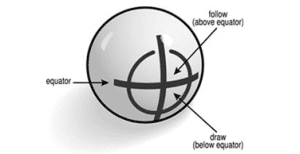
Supposedly "a soft tip at slow speed has a longer contact time (about 0.002-0.003 sec), a very hard tip (e.g., phenolic) at fast speed has a shorter contact time (about 0.0008 sec)".(1)
In the pool world, there is a highly regarded gentleman who has his doctorate in mechanical engineering and he states that a soft tip doesn't impart more spin than a hard tip (where I got the above information), although that doesn't match my anecdotal experience as a life long pool player.
Golf a much different sport, with many different variables, it is widely accepted that a softer golf ball stays in contact longer with the golf club, thus imparting more spin, here is study stating as much,
Can comparisons be made between the two sports?
Thank you for your time!1. https://billiards.colostate.edu/faq/cue-tip/hardness/
2. http://www.freepatentsonline.com/7762911.html
I enjoy playing pool, my knowledge of physics is almost nonexistent, so I apologize in advance for my ignorance. In a nutshell, I would like to understand how the hardness of a pool tip effects energy transfer in that brief moment of impact when a pool cue tip hits the cue ball. A common shot in pool is called a "draw shot" where you hit below the center axis on the cueball, imparting a backward spin, when the cue ball makes contact with the object ball it reverses direction due to the backward spin.
Supposedly "a soft tip at slow speed has a longer contact time (about 0.002-0.003 sec), a very hard tip (e.g., phenolic) at fast speed has a shorter contact time (about 0.0008 sec)".(1)
In the pool world, there is a highly regarded gentleman who has his doctorate in mechanical engineering and he states that a soft tip doesn't impart more spin than a hard tip (where I got the above information), although that doesn't match my anecdotal experience as a life long pool player.
Golf a much different sport, with many different variables, it is widely accepted that a softer golf ball stays in contact longer with the golf club, thus imparting more spin, here is study stating as much,
"Gobush (1996a) measured the coefficient of friction between both soft covered three-piece
and hard covered two-piece balls and a club insert that was mounted on a force transducer.
The coefficients of friction were determined from both the ratio of the measured transverse and
normal forces and from calculations using measurements of the velocity components of the
balls before and after impact. For a relatively high angle of incidence of 70˚ and an incoming
tangential speed of 12.8 m s−1, both methods gave a value of approximately 0.38 for the three-
piece ball and 0.16 for the two-piece ball. The rebound spin rates were found to be 66.2 rps
for the three-piece ball and 25.5 rps for the two-piece ball. For a greater incoming tangential
speed, 26.8 m s−1 for the three-piece balls and 25.9 m s−1 for the two-piece balls, the average
coefficient of friction decreased to approximately 0.29 and 0.075 respectively." (2)
"
At the end of the day by my logic, you have the golf ball in contact with the clubface and the cue tip is in contact with cueball for just a fraction of a second. I don't understand why cue with a soft cue tip wouldn't impact more spin in that millisecond, the way more spin is imparted using a golf club with a softer face or a softer ball? and hard covered two-piece balls and a club insert that was mounted on a force transducer.
The coefficients of friction were determined from both the ratio of the measured transverse and
normal forces and from calculations using measurements of the velocity components of the
balls before and after impact. For a relatively high angle of incidence of 70˚ and an incoming
tangential speed of 12.8 m s−1, both methods gave a value of approximately 0.38 for the three-
piece ball and 0.16 for the two-piece ball. The rebound spin rates were found to be 66.2 rps
for the three-piece ball and 25.5 rps for the two-piece ball. For a greater incoming tangential
speed, 26.8 m s−1 for the three-piece balls and 25.9 m s−1 for the two-piece balls, the average
coefficient of friction decreased to approximately 0.29 and 0.075 respectively." (2)
"
Can comparisons be made between the two sports?
Thank you for your time!1. https://billiards.colostate.edu/faq/cue-tip/hardness/
2. http://www.freepatentsonline.com/7762911.html